

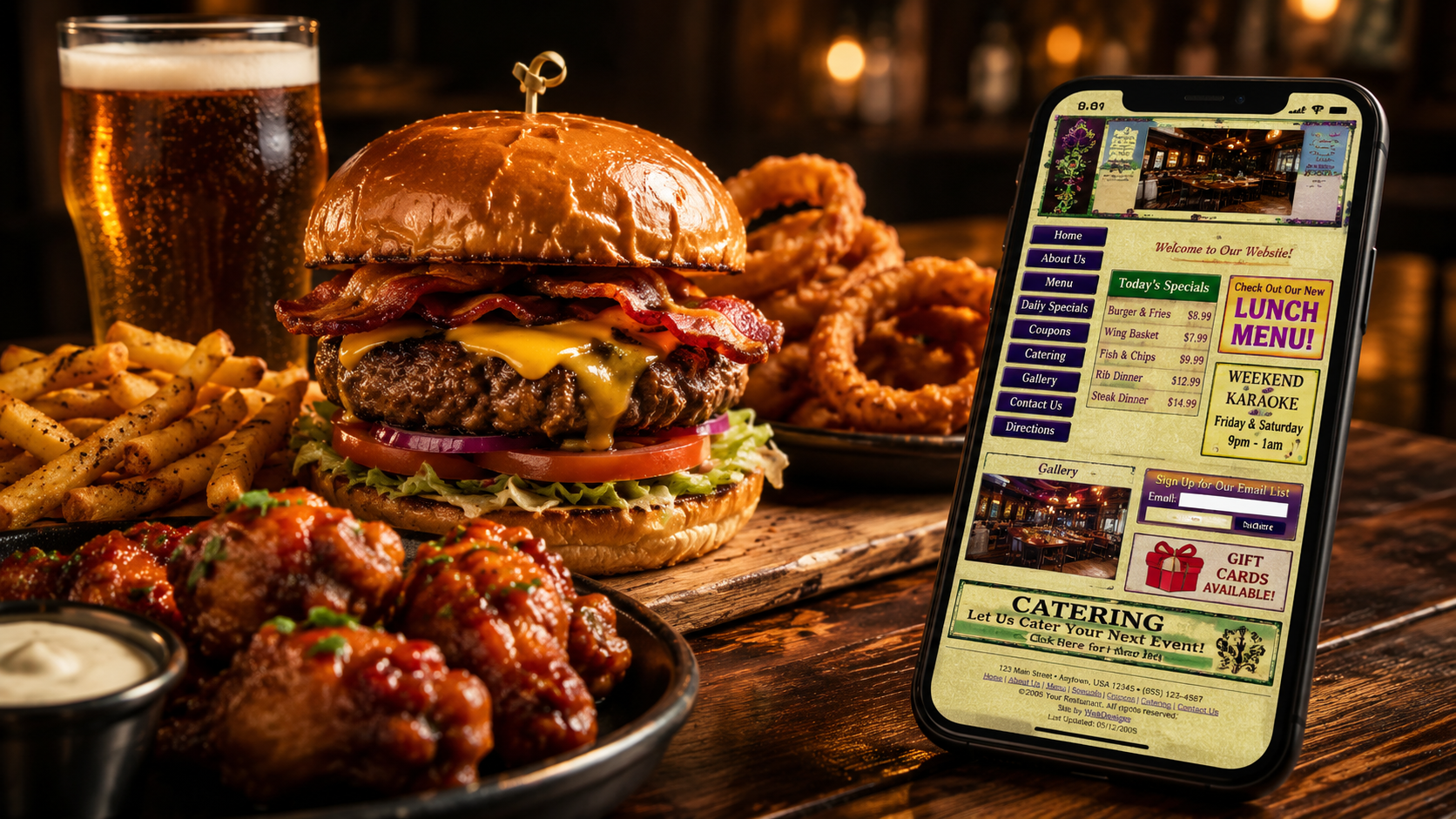
Your Customers Are Already Looking for You
People usually decide where they are eating before they ever walk through the door. They search, scroll, check menus, compare hours, look at photos and figure out whether a restaurant fits what they want that night.
Most of that happens on a phone, which means your website has a very small window to make a good impression. Customers want to know where you are, what you serve, whether you are open and what their next step should be.
Your website should make choosing your restaurant ridiculously easy. If it creates confusion instead, customers have plenty of other options waiting in the next search result.
A Facebook Page Is Not a Restaurant Website
Social media absolutely matters. Instagram and Facebook are great places to show off your food, promote events and stay connected with customers.
But they should not be doing the job of your website.
Your customers should not have to dig through months of posts to find your current menu, search through graphics for your hours or send a message just to ask about catering. Important information should be easy to find the second someone lands on your site.
And if your only menu option is a blurry PDF that requires pinching, zooming and patience, you are making hungry customers work harder than they should have to.
Social media can help people discover your restaurant. Your website should help them decide to visit it.
Your Menu Needs to Work on a Phone
Your menu is one of the most important parts of your restaurant website, and it needs to work on the device your customers are actually using.
That means it should be easy to read, easy to navigate and easy to update when prices, dishes or availability change. Customers should not have to zoom in just to figure out what comes on a sandwich or swipe around a giant document looking for appetizers.
A good mobile menu feels effortless. Guests can find what they want, understand what you offer and start getting hungry before they ever arrive.
Looking Good Is Not Enough
We love beautiful websites, but a restaurant website has to do more than look good.
It needs to load quickly, work well on mobile, make navigation obvious and keep important information accurate. Your hours, menu, phone number, location, ordering options and reservation links should all be easy to find without making customers hunt for them.
Your website should also be structured in a way that helps Google understand your restaurant and gives visitors clear next steps once they arrive.
If the site is pretty but confusing, slow or outdated, it is not doing enough for your business.
Stop Making Customers Work for It
Every unnecessary step creates another opportunity for someone to leave.
If your hours are hard to find, your menu is difficult to read or your online ordering link is buried somewhere unexpected, customers are forced to stop and figure things out. Most people are not going to do that when another restaurant is one tap away.
An outdated website can create doubt too. If the information looks old or the site feels abandoned, customers may start wondering whether the restaurant is still active, whether the menu is current or whether the hours are correct.
Your website should remove friction from the decision, not add more of it.
This Is Why We Built Salt & Pixel
Salt & Pixel Studio was built for independent restaurants that deserve something better than overpriced agencies, generic DIY websites and platforms that make every business look exactly the same.
We do not think a professional restaurant website should be reserved for giant hospitality groups with giant marketing budgets.
Local restaurants deserve websites that look like their business, work beautifully on every device and make it easier for customers to find the information they need.
That means thoughtful design, practical functionality and a website you are not left trying to figure out on your own.
Your Food Deserves a Better Website
Your restaurant already has a personality. Your food, your space and the experience you give customers all say something about who you are.
Your website should carry that same personality online while making it simple for someone to go from searching for dinner to choosing your restaurant.
Because when somebody nearby is hungry tonight, you want your website helping them make that decision.
Make sure they find you, and make sure they have a reason to stay.